

Marshall Amplification is one of the most iconic names in music history. The unmistakable roar of a Marshall amp has shaped the sound of rock, blues, metal, and punk for over six decades. From humble beginnings in Bletchley, near Milton Keynes, to global stages and legendary recordings, Marshall has built a reputation for quality, reliability, and affordability—a combination that helped define modern guitar music.
From Teaching to Amplification
The story begins in the early 1960s with Jim Marshall, a London-based drum teacher and music shop owner. At the time, British guitarists were struggling to get their hands on powerful American amplifiers, which were expensive, difficult to import, and often unreliable on UK voltage. Jim Marshall saw an opportunity: to create a British-made amplifier that delivered power, tone, and durability at a price musicians could realistically afford.
Working with a small team of engineers, Marshall began building amplifiers in Bletchley, an area that would quietly become the birthplace of one of the most influential sounds in music. The first Marshall amps were inspired by American designs but quickly evolved into something unique. With stronger midrange punch, aggressive overdrive, and raw character, these early amps stood apart. Guitarists immediately noticed the difference.
Popular Rock Amplifiers
By the mid-to-late 1960s, Marshall amps were everywhere. Artists like Jimi Hendrix, Eric Clapton, Pete Townshend, and Jimmy Page embraced the brand, pushing their amplifiers to breaking point and discovering that the distortion wasn’t a flaw—it was magic. The famous Marshall stack, combining a powerful head with multiple speaker cabinets, became both a sonic weapon and a visual symbol of rock rebellion.
What made Marshall truly special was its commitment to musicians. While many manufacturers chased premium pricing, Marshall focused on delivering professional-grade sound at an affordable price. These amps were built to survive the road: thick tolex, solid cabinetry, and robust electronics meant they could take a beating night after night. This durability helped cement Marshall’s reputation as a working musician’s amplifier.
JCM800 - A Killer Tone
One of the most legendary models to emerge from Marshall’s long history is the JCM800, introduced in the early 1980s. Known for its tight low end, aggressive mids, and unmistakable crunch, the JCM800 became a staple of rock and metal. It powered countless records and tours, from hard rock to early thrash metal, and remains one of the most sought-after amps today.
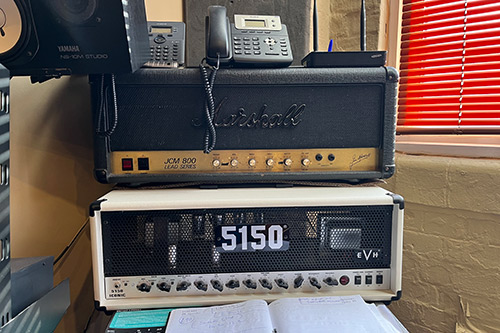
Here at Select Recording Studios, we can personally vouch for Marshall’s legendary build quality. We’ve been using a Marshall JCM800 since 1985, and it has never broken down. Decades of sessions, countless guitarists, and endless hours of use—and it’s still going strong. It’s a true workhorse of an amplifier and a perfect example of why Marshall amps are trusted worldwide.
Alongside the JCM800, we also use a Marshall EL84 20/20 power amp, which delivers classic British tone in a more controlled and studio-friendly format. Its clarity, warmth, and punch make it ideal for a wide range of recording applications, from clean tones to driven textures.
Don't Forget the Cab's
Speaker cabinets are just as important as the amplifier head, and Marshall has always excelled here too. At our London Recording Studio, we run a Marshall 1960 cabinet loaded with 30-watt Greenback speakers, delivering rich mids, smooth highs, and that unmistakable vintage crunch. We also have a 1970s Marshall cabinet fitted with 25-watt Greenbacks, which offers an even warmer, more organic response. Both cabinets sound absolutely fantastic and provide guitarists with authentic, era-correct tones that sit perfectly in a mix.
From its origins in Bletchley to studios and stages across the world, Marshall has remained true to its mission: empowering musicians with reliable, great-sounding gear that doesn’t compromise on character. Decades later, Marshall amps are still being played, recorded, and loved—not just because of nostalgia, but because they simply sound right.
At Select Recording Studios, Marshall isn’t just a brand—it’s part of our history, our workflow, and our sound. 🎸